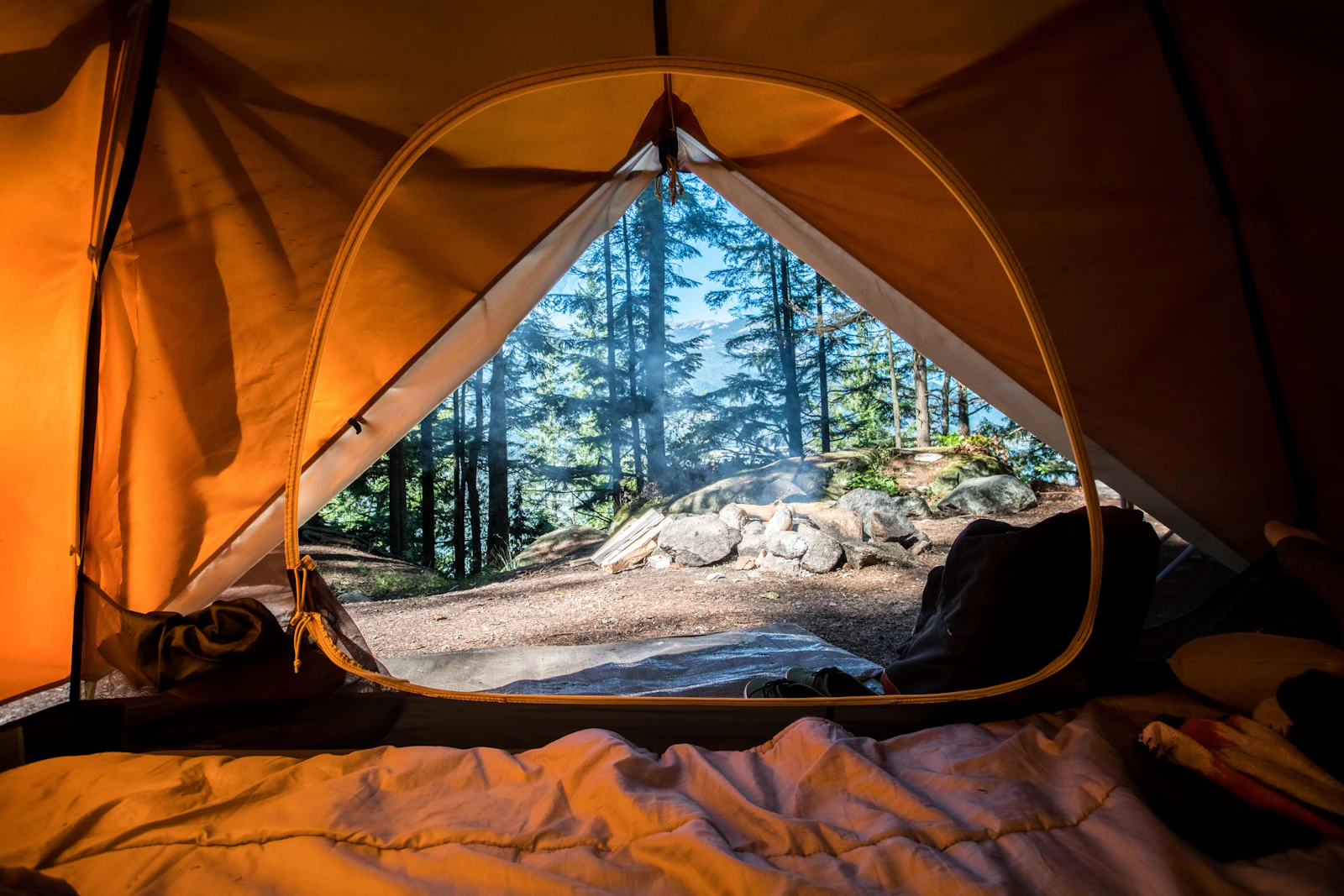
Korea has over 7M campers. Family camping, solo car camping, backpacking. Research shows sleeping in nature resets urban circadian rhythm and normalizes melatonin secretion. But — sleeping well while camping isn't easy. Almost everyone tosses on the first night, and car campers wake to dawn cold.
This article covers 12 techniques for camping/car camping/outdoor sleep — mat, sleeping bag, tent, temperature, noise, light, plus Korean camping culture.
1) The mat — #1 sleep factor
Most campers think "good tent = good sleep," but in reality the mat determines 80%. Thin mat = cold transfers directly to back, uncomfortable posture.
- R-value (insulation) — spring/fall ≥ 3.0, deep winter ≥ 5.0. Low R-value = cold wakes you despite good bag.
- Thickness — minimum 5cm. Side sleepers 7cm+.
- Types — air mat (light, puncture risk), inflatable (balanced), foam (cheap, durable)
- Double mat — foam + air combo is best for both R-value and comfort
2) Sleeping bag — comfort ≠ extreme
Bag temperature usually shows 3 numbers: comfort (sleep well), limit (may wake from cold), extreme (survival). Your reference is comfort, with -5°C margin for safety.
- Spring/fall (5-15°C): comfort 0°C bag
- Summer (20°C+): liner or camp blanket
- Late fall (-5°C): comfort -5°C
- Winter (-15°C+): comfort -15°C or warmer bag + liner
3) Tent position — wind and slope
- Avoid direct wind — entrance perpendicular or opposite to wind
- Slight slope — head higher than feet. Flat ground floods in rain
- Caution under trees — falling branches, pine needles, condensation
- 100m+ from water — mosquitoes, humidity, noise
- Sunrise direction — east entrance = early wake. West for sleeping in
4) Car camping temperature — insulation and ventilation
Biggest enemies in car camping: condensation and cold. Two people emit 1L+ of moisture per night through breathing.
- Window insulation — sun shades (foil mats) on all windows. 5°C interior difference
- Slight ventilation — windows cracked 1-2cm. Solves CO2 and condensation
- Heater — gas catalytic heaters = CO risk. Electric blanket/USB heat mat recommended
- Bag + car blanket combo — car camping needs less mat R-value (car floor insulates). Spring/fall bag works
5) Noise — nature, wind, animals, people
- Silicone earplugs — 30dB blocking. More hygienic and reusable than foam
- White noise — rain sound app or small mini fan
- Couple camping — separate tent for snoring or earplugs mandatory
- National parks/camps — quiet hours after 10 PM. Avoid noisy sites next time
6) Light — tents are too bright at dawn
Tents brighten by 5 AM. Melatonin drops, you wake naturally.
- Eye mask — light silk or foam
- Blackout tent — some family tents have blackout coating. Pricey
- Car window covers — foil mat + magnetic clips
- Outdoor lights off — adjust entrance direction if camp lamp shines in
7) Food/drink — extra care outdoors
- Alcohol — easy to overdo while camping, but enemy of camp sleep. Stop 3hrs before bed
- Meat/greasy food — digestion blocks deep sleep. Light dinner
- Warm tea — chamomile, rooibos. Boil ahead in thermos
- Hydration — too much = midnight bathroom. Reduce 1hr before bed
8) Clothing — too thick = colder
Counterintuitive: thick clothes inside sleeping bag compress insulation, making you colder.
- Layering — thin merino wool base + light fleece
- Hat — 30% body heat lost through head. Beanie mandatory
- Socks — cold feet wake you. Thick wool socks
- Clothes inside bag — put inside bag before bed to warm up
9) Bathroom distance — midnight game changer
- 50m+ to bathroom = no midnight visits
- Alternative: small PE bottle (pee bottle) in tent box
- Female campers: portable urinal funnel (she-pee)
- Book sites near bathrooms when reserving
10) First-night effect — everyone sleeps badly
"First-night effect" appears in camping, hotels, travel. One brain hemisphere stays alert for danger. It's normal.
- Don't stress if first night is bad
- Second night adapts. 3 consecutive nights = best camp sleep
- 1-night trips inherently have poor sleep — adjust expectations
11) Why camping is good for sleep — circadian reset
University of Colorado study: 1 week camping shifted circadian rhythm 2 hours earlier, syncing to natural sunrise/sunset. "Night owls" become "morning people" after a week of camping.
- Indoor light and screens delay melatonin
- Camping normalizes circadian via natural light alone
- Weekend camping has partial effect
12) 4-season camping checklist
- Spring (Mar-May) — big temp range. Comfort 0°C, R-value 3
- Summer (Jun-Aug) — mosquitoes, humidity. Mesh tent, liner only
- Fall (Sep-Nov) — condensation. Ventilation + comfort -5°C
- Winter (Dec-Feb) — winter gear mandatory. Comfort -15°C, hand warmers, wool socks, R-value 5+
Camping sleep isn't just outdoor sleep — it's opportunity to reset circadian rhythm. First night awkward, but from second night you can sleep deeper than in the city. With mat, bag, temperature, and light dialed in, nature gives sleep back.


