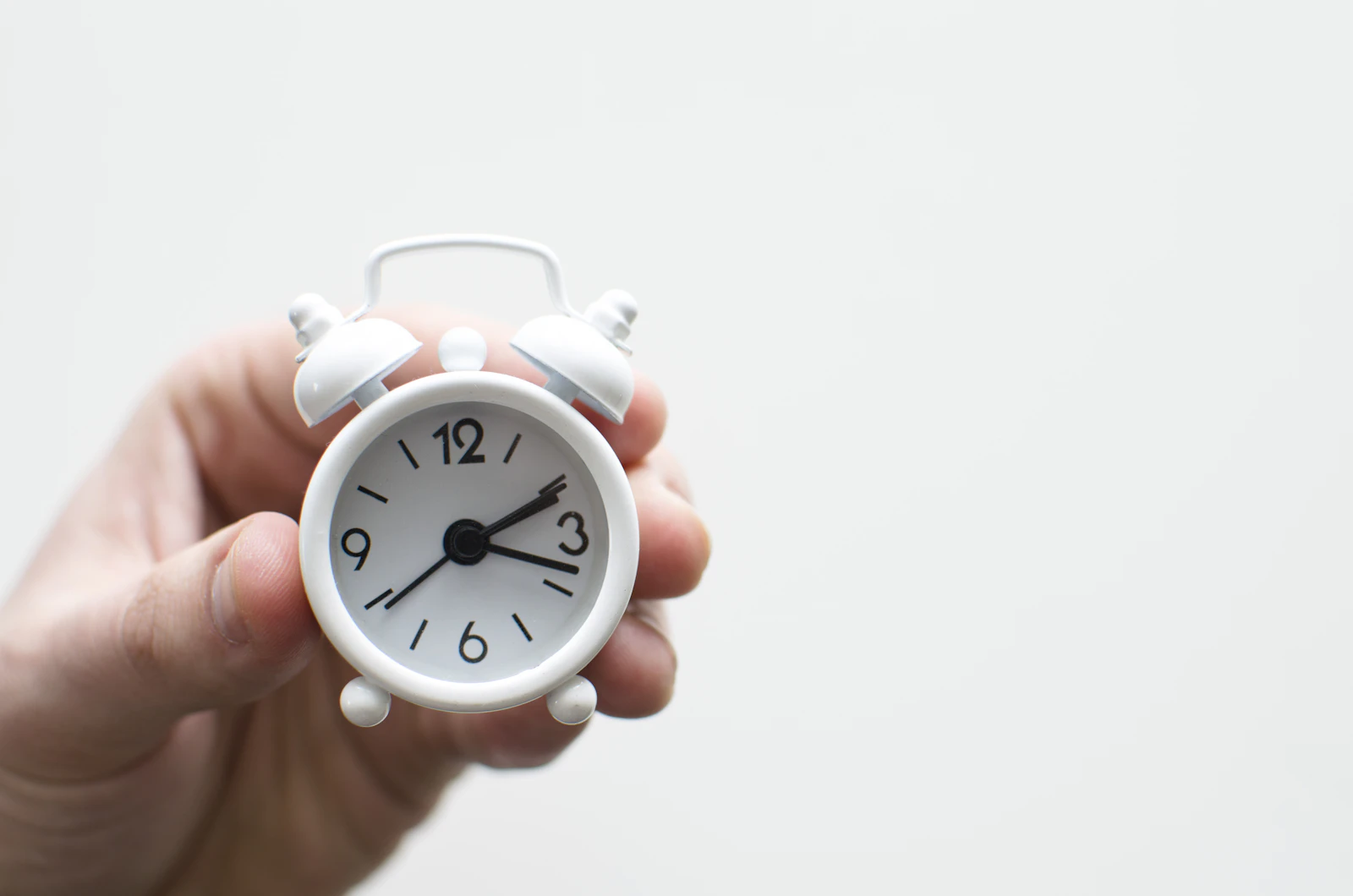
"30 more minutes after turning off the alarm, then late." "Wake up like a zombie every morning." "Brain fog until lunch." Common Korean office worker mornings. But morning is half of sleep hygiene — how you wake matters as much as how you sleep. A science-based comprehensive morning wake-up guide.

Snooze — the biggest trap
Why it's bad
- 5–10 min snooze sleep = light sleep cycle starts → alarm → starts again → fragmented sleep
- Each fragment alarms at start of deep sleep → "sleep inertia" maxed
- Little benefit to sleep itself, but extra difficulty waking
- Disrupts cortisol cycle
Sleep inertia
Hazy cognitive state after waking. Average 15–30 min (1–2 hours if sleep-deprived). Snooze intentionally restarts this inertia each time.
Solution
- Get up on first alarm (hard but possible)
- Place alarm far from bed (must get up to turn off)
- Smart alarm to wake during light sleep
- If well-rested, snooze itself rarely needed
Alarm types compared
1. Regular alarm (phone)
- Pro: free, available everywhere, many sounds
- Con: phone next to bed → screen temptation before sleep, SNS after waking
- Tip: put phone in living room with loud alarm
2. Smart alarm (Sleep Cycle, Pillow, etc.)
- Detects sleep stage → wakes during light sleep (N1/N2)
- Less sleep inertia → natural waking
- Alarm time window of 30 min (e.g., between 7:00–7:30 during light sleep)
- Price: free app to $10/month, included in Oura/Garmin etc.
- Limit: not 100% accurate (sleep measurement limit)
3. Light alarm (sunrise alarm)
- Gradually brightens 30 min before set time (mimics sunrise)
- Natural melatonin decrease → cortisol ↑ → natural waking
- Alarm sound at last stage with soft bird sounds etc.
- Very effective in winter / dark environments
- Price: Philips Wake-up Light, Hatch Restore — $85–250
4. Vibration alarm (smart watch)
- Gentle vibration on wrist
- Doesn't wake partner (family use)
- Combines with smart alarm
- Price: Apple Watch, Garmin, $250–650
5. Scent alarm
- Sprays coffee/mint/citrus scent at set time
- Wakes through olfactory stimulation
- Still new tech, limited efficacy data
- Price: $250–400
6. Vibrating mattress/pillow
- Vibrator under mattress or pillow
- Mainly for hearing-impaired or very deep sleepers
- Price: $40–170
Perfect 30-min wake-up routine
0 min — turn off alarm
- No snooze — get up first try
- Don't stay lying down (risk of falling asleep)
0–1 min — get up
- Sit up in bed
- 30 sec breathing (4 deep breaths)
- Stretching — arms, legs, torso
1–5 min — sun exposure
- Go to window, fully open curtains
- Or step outside for 30 sec sun
- If dark winter, light box (10,000 lux) for 5 min
- Strongest wake signal — melatonin instantly drops
5–10 min — hydration and alertness
- 500 ml water (replenish overnight dehydration)
- Cold water face wash (5 sec on face — vagal nerve stim, instant wake)
- Or cold shower (30 sec to 1 min if possible)
10–15 min — light exercise
- Stretching 5–10 min
- Or walking (even indoors)
- Heart rate ↑ + body temp ↑ = alertness ↑
15–30 min — breakfast and prep
- Protein-led breakfast (eggs, tofu, Greek yogurt)
- No sugar bombs (glucose swing → drowsiness)
- Prep (clothes, hair, bag)
After 30 min — first caffeine
- Coffee or tea (optional)
- Why wait 60–90 min? — Adenosine (drowsiness signal molecule) is still high right after waking. Caffeine blocks adenosine but effect is limited. After 60–90 min, natural adenosine drop + caffeine = synergy.
- But not too late (after 10 AM) — afternoon caffeine threatens sleep — before 9 AM

The truth about "5 AM Club"
Claim
After Robin Sharma's book "5 AM Club," 5 AM wake-up became popular as success secret. Examples (Tim Cook, Michelle Obama, etc.).
Reality
- Must match your chronotype: natural for larks (25%), but forcing owls (25%) causes chronic sleep loss
- 5 AM isn't cause of success: cherry-picked examples — time matching your schedule matters most
- Don't shorten sleep: for 5 AM wake, sleep at 9–10 PM. Midnight + 5 AM = sleep loss
- Sustainability: 1–3 months challenge possible, hard to sustain a year
Find your time
- Know your chronotype (prior post)
- Sleep 7–9 hours naturally and wake instead of forcing 5 AM
- Maintain that time consistently
- Consistency matters more than the actual time
Morning wake-up drugs
Caffeine — most common
- Coffee, tea, energy drinks
- Reasonable dose: under 400 mg daily (4 coffees)
- Timing: 60–90 min after waking, morning only
- Caution: dependence, afternoon caffeine wrecks sleep
Modafinil and other prescription stimulants
- For medical indications only (narcolepsy, etc.)
- Not recommended for general use — side effects, dependence
- "Brain enhancement" marketing is dangerous
Ritalin, Adderall (ADHD meds)
- Only prescribed for diagnosed ADHD
- Dangerous if misused as "study aid"
Natural stimulants
- L-theanine: green tea amino acid. With caffeine — reduces caffeine's jitters/anxiety, smoother effect
- Ginseng: Korean traditional, mild but safe
- Mate, guarana: natural caffeine sources
Waking without alarm
Possible?
Yes — with 7–9 hours sleep + consistent timing + circadian stability. Body wakes via natural cortisol rise on its circadian rhythm. But (1) hard with Korean office schedules, (2) even a few days of sleep loss breaks it.
Gradually reduce alarm dependence
- Same sleep time daily (within ±30 min)
- Same alarm time daily
- After 1–2 weeks, start naturally waking 1–2 min before alarm
- Try no alarm on vacations
- Gradually increase alarm-free days
Weekend same time
- Late weekend sleep disrupts circadian
- Weekend no-alarm natural time = know your real sleep need
- If close to weekday alarm time, your sleep is sufficient
Special situations
Very deep sleepers
- Multiple alarms + vibrating mattress + light alarm + scent alarm combo
- Family/roommate help
- Check for sleep apnea (deep sleep = common apnea symptom — paradoxical but sleep loss + apnea compress deep sleep)
Night shift / shift work
- "Morning" means different — your wake after sleep
- Dark before bed, consistent sleep timing
- After waking, bright light if possible (even during day hours)
- Consistent schedule (minimal variation)
Dark winter mornings
- Light alarm essential (no natural sun)
- After waking, 10,000 lux light box 15–30 min
- Vitamin D supplement (with doctor)
- If possible, lunchtime sun (short daylight)
Travel / jet lag
- Set alarm to destination time immediately
- Morning sun to reset circadian
- Carry light box if jet lag 7+ days
Weekend sleep-in
- Understand desire to catch up on weekday sleep loss
- But 1+ hour sleep-in = social jet lag
- Ideal: weekend within 1 hour of weekday
- If need recovery sleep, go to bed early (don't sleep late)
Korean office worker mornings — common traps
"6 AM commute prep"
- Long commute = 6 AM wake
- 11 PM-midnight sleep = 5–6 hours — insufficient
- Solution: (1) adapt to 10–11 PM bed, (2) negotiate WFH, (3) move closer to work, (4) negotiate adjusted hours
Day after drinking dinner
- 1–2 AM sleep + 7 AM wake = 5 hours sleep + alcohol
- Very hard next day
- Solution: schedule lighter day after hoesik, 20-min nap after lunch
Day after late work
- Similar pattern
- Solution: limit late work, sleep priority
Sunday sleep-in → Monday difficulty
- Cause of "Sunday Scaries"
- Solution: similar wake time on Sunday as weekday
Waking children
Ideal child wake-up
- Natural wake (after sufficient sleep)
- If alarm needed, gentle music
- Open curtains for sun
- Gentle physical contact (hug)
- 5–10 min slow in bed
Avoid
- Strong shaking, loud sounds — cortisol spike, stress start
- Immediate TV/phone — blurs waking
- Skipping breakfast (school difficulty)
- Waking right before school (rushed)
Teenagers
- Biologically natural to sleep late and wake late (prior post)
- Morning waking very hard — soft alarm → progressive increase or light alarm
- Alarm far from bed
- Secure breakfast time (mandatory)
Recommended alarm apps
General (free)
- Phone's default clock app
- Various sounds, vibration, snooze settings
Smart alarms
- Sleep Cycle: most popular, sleep tracking + wakes during light sleep. $5–10/month
- Pillow: iPhone-focused, Apple Watch integration
- Sleep as Android: Android, many features
Light alarms
- Philips Wake-up Light HF3650: most validated light alarm. $250
- Hatch Restore: light + sound + meditation integrated. $250
- Casper Glow Light: small, wireless. $125
Challenging alarms (anti-laziness)
- Alarmy: Korean app. Photo, math problem, QR code missions
- Step Out: requires walking to dismiss
- I Can't Wake Up!: various missions
Various wake-up attempts
Traditional Korean
- Warmth of ondol heated floor → slow waking
- Modern: bedroom slightly cool to sleep, warm living room after waking
Yoga (Surya Namaskar — Sun Salutation)
- 12 posture sequence — 5–10 min
- Whole body wake + deep breathing + sun (outdoors if possible)
Japanese radio exercise
- 3–5 min light exercise
- At schools/companies as group
- Some Korean companies adopt
Conclusion — morning is half of sleep management
"Slept well" depends on how you wake. Sufficient sleep + consistent wake + sun + light exercise + caffeine timing is the golden combo. Avoid snooze trap, use the right alarm system for you (smart, light, scent etc.). It's OK if you're not a "morning person" — accept your chronotype and adapt. Waking at the same time daily is the biggest secret.


