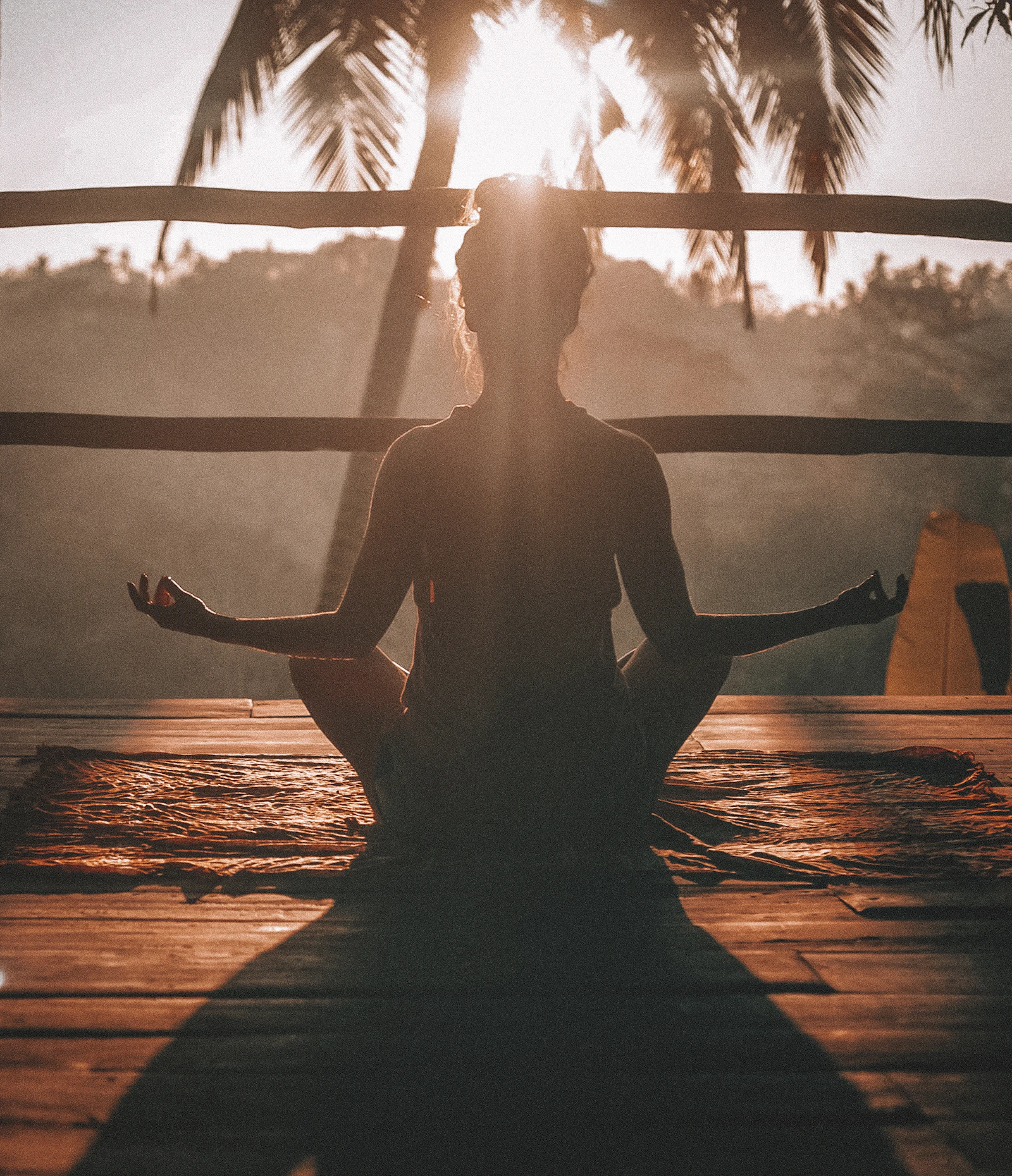
Why ‘Slow Breathing’ Becomes Medicine
Humans normally breathe 12–20 times per minute. Yet where meditative traditions and physiology meet is a surprisingly narrow window — about 6 breaths per minute, a 10-second cycle. Rutgers psychophysiologist Paul Lehrer's 2013 Frontiers in Public Health review, ‘Heart rate variability biofeedback: How and why does it work?’, summarized that around 6 bpm, the baroreflex resonates with the respiratory rhythm, dramatically amplifying heart rate variability (HRV). Respiratory sinus arrhythmia — the inhale-speeds-up, exhale-slows-down pattern — reaches maximum amplitude in this band.
Russo's 2017 Breathe review framed this slow breathing as ‘resetting’ the autonomic system through parasympathetic activation, stabilized oxygen-CO₂ balance, and vagal afferent signaling. ‘6 bpm’ is not magic; it is the evolutionary resonance frequency of our cardio-respiratory system.
Box Breathing — The Navy SEAL Simplicity
Inhale 4, hold 4, exhale 4, hold 4. ‘Box breathing’ (or square breathing) was popularized by former Navy SEAL Mark Divine and has entered military, police, fire, and EMS curricula as a ‘rapid-calm tool.’ At about 3.75 bpm it is slow, but the long pauses help beginners avoid hyperventilation dizziness.
Direct box-breathing RCTs are sparse; the evidence comes under the umbrella of ‘slow paced breathing in general.’ Korean special-forces, fire academy, and SWAT training have likewise adopted 4-4-4-4 as ‘tactical breathing’ — to stabilize heart rate before engagement and preserve marksmanship.
4-7-8 — Weil's Prescription Between Physiology and Marketing
Harvard-trained integrative physician Andrew Weil popularized 4-7-8 — inhale 4, hold 7, exhale 8 — as a ‘natural tranquilizer for the nervous system,’ later inflated on social media into ‘fall asleep in one minute’ claims.
The physiological direction is solid. Exhales longer than inhales drive vagal activation and parasympathetic dominance (Hayano 1996 and others). Because the rate drops to ~3.75 bpm — below the 6 bpm resonance band, into a zone where hypoxia and dizziness are possible — Weil's own recommendation of 4–8 cycles per session is sensible.
But there are essentially no RCTs of 4-7-8 as such. Most claimed effects — instant relief from insomnia, anxiety, panic — are really ‘slow breathing in general’ branded as 4-7-8. It works; its ‘unique magic’ is unproven.
Coherent Breathing and SKY — The Brown–Gerbarg Clinical Line
Psychiatrists Richard Brown and Patricia Gerbarg, in 2005 and 2009 papers in J. Altern. Complement. Med., positioned balanced 5.5–6 bpm breathing — ‘coherent breathing’ — as a core module for depression, anxiety, PTSD, and chronic pain. It distills India's Sudarshan Kriya Yoga (SKY) into a clinical form.
Key clinical data:
- Brown 2005 — SKY in Vietnam veterans with PTSD significantly reduced depression and anxiety.
- Naik 2018 — adding an 8-week SKY protocol to standard care produced additional reductions in depression scores.
- Goessl 2017 Psychological Medicine meta-analysis (24 RCTs) — HRV biofeedback (mostly 6 bpm breathing) reduced stress (g=0.81) and anxiety (g=0.83) with large effect sizes.
Wim Hof and Its Shadow — Anti-inflammation, but Syncope
Dutch ‘Iceman’ Wim Hof's method (WHM) combines ① 30–40 forced hyperventilations, ② maximum breath-hold, ③ recovery inhale, ④ cold exposure — the opposite direction of generic slow breathing.
In 2014, Matthijs Kox's team in PNAS showed that WHM-trained volunteers, given intravenous E. coli endotoxin, mounted lower inflammatory cytokine responses than controls, demonstrating intentional autonomic modulation. It cracked a long-held dogma that the autonomic system is beyond conscious control.
But the same paper and follow-up work consistently warn: forced hyperventilation drives hypocapnia → cerebral vasoconstriction → syncope, and deaths have occurred when practiced in water, while driving, on cliffs, beaches, or in bathtubs. WHM lives in a different risk class than ‘4-7-8 in bed.’ Solid ground, safe posture, and a buddy are minimum conditions.
Cyclic Sighing — Balban 2023, the Freshest Evidence
In January 2023, Melis Balban and colleagues from Andrew Huberman's Stanford lab published an RCT in Cell Reports Medicine that has reset the field. 108 participants were randomized into ① mindfulness meditation, ② balanced nasal breathing, ③ box breathing, ④ cyclic sighing — one nasal inhale, a brief second top-up inhale, then a long oral exhale — practiced 5 minutes daily for 4 weeks.
Result: all groups improved, but cyclic sighing significantly outperformed mindfulness and the other breathwork arms on positive affect and anxiety reduction. Resting respiratory rate also dropped at week 4. The proposed mechanism: a long, forceful exhale actively offloads alveolar CO₂ and drives stronger parasympathetic activation.
5 Breathwork Techniques at a Glance
| Technique | Protocol | Evidence | Effect | Cautions |
|---|---|---|---|---|
| Box 4-4-4-4 | 4s in/hold/out/hold (~3.75 bpm) | Indirect (slow-breath RCTs) | Acute calming, focus | Long holds taxing for some |
| 4-7-8 | 4s in / 7s hold / 8s out | Indirect (slow-breath RCTs) | Sleep onset, fast calm | Limit to 4–8 cycles per round |
| Coherent 6 bpm | 5s in / 5s out | Direct RCTs, Goessl 2017 meta | Chronic anxiety, depression, PTSD | Needs 10–20 min daily |
| Wim Hof | 30 hyperventilations + hold + cold | Kox 2014 PNAS anti-inflam. | Anti-inflammation, arousal | Syncope/death — no water, no driving |
| Cyclic Sighing | Double nasal inhale + long oral exhale, 5 min/day | Balban 2023 direct RCT | Anxiety↓, mood↑ (4 wk) | Very low risk |
What Breathwork Is Not — Panic Hyperventilation and Just Inhaling
Don't confuse: panic-attack hyperventilation looks superficially like Wim Hof's intended hyperventilation but is automatic, runaway, and uncontrolled — driving more anxiety, not less. Therapeutic breathing depends on conscious modulation of rate, depth, and ratio.
And mindfulness of breath is not about changing breath but observing it. The Satipaṭṭhāna tradition's ānāpānasati is attention training, not respiratory control. The pathways differ — breathwork is direct autonomic intervention; mindfulness is higher-order cognitive change.
Polyvagal Critique and Buteyko — Between Hype and Underdelivery
A marketing staple is ‘breathwork stimulates the vagus nerve,’ haloed by Stephen Porges's polyvagal theory. But Paul Grossman's 2023 Biological Psychology critique — and others — argues the theory's anatomical assumptions about the human vagus are not empirically supported, and that polyvagal is an inaccurate mechanism story for the clinical effects. ‘Breathwork helps’ is a fact; ‘polyvagal explains it’ remains contested.
The opposite kind of overclaim exists too. Russia's Konstantin Buteyko built a method on a ‘chronic hyperventilation’ hypothesis of asthma, deliberately reducing breath volume. Bruton's 2018 Lancet Respiratory Medicine RCT found Buteyko improved asthma symptom scores and reduced inhaled steroid use — but did not improve actual pulmonary function (FEV1). Useful adjunct, not miracle asthma cure.
Korean Context — Danjeon Breathing, Mabo, and Military Drills
Korea has deep soil for breath cultivation. The Daoist-Danhak tradition of danjeon breathing (lower-abdomen, slow, deep) converges on essentially the same parameters as modern coherent breathing — about 6 bpm diaphragmatic breath. Kuk Sun Do and Jeongsim Do similarly settle into the resonance band.
Clinical integration has followed. Korean psychiatry researchers (e.g., Cho Yong-rae 2010) have refined CBT-plus-breathing protocols for panic disorder. Korean special-forces and firefighter training have folded 4-4-4-4 box breathing into ‘tactical breathing.’
On the app side, global Calm and Headspace coexist with the domestic Mabo for Korean-language breathing and meditation content. Effect sizes of standalone apps run small-to-medium; the lever is not the tool but the daily 5–10 minutes themselves.
Conclusion — Not ‘The Best,’ but One, Every Day
For breathwork, ‘what's best’ matters less than ‘what you do for 5 minutes daily.’ Chronic anxiety or depression: coherent 6 bpm, 10–20 minutes a day. Trouble sleeping: 4-7-8 for 4 cycles. Pre-presentation: 1–2 minutes of box breathing. Mood and general anxiety: 5 minutes of cyclic sighing — the freshest candidate from Balban 2023. Wim Hof is fascinating; don't forget its risk class.
Breath is nearly the only conscious handle our body offers onto the autonomic nervous system. Hold it neither too lightly nor too violently — that is the conclusion of the science.


